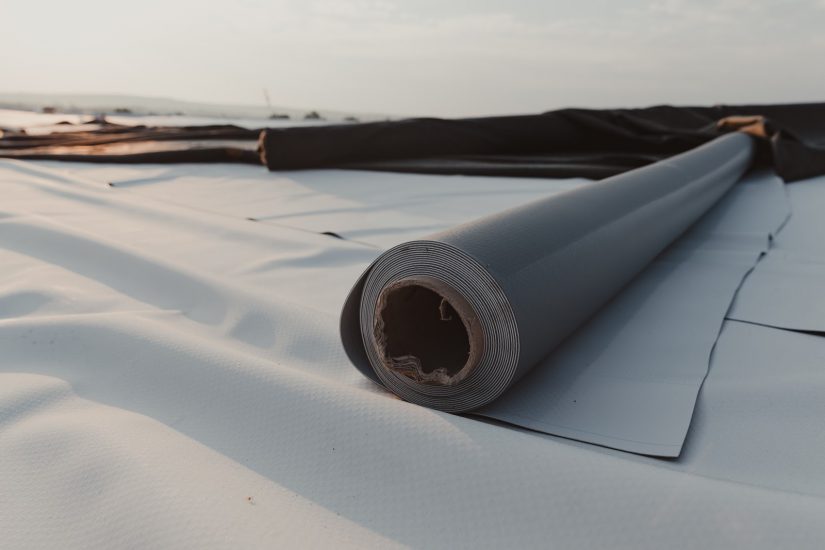
Ethylene propylene diene terpolymer (EPDM) is a dependable, heavy-duty synthetic rubber roofing membrane and remains one of the most widely used roofing materials worldwide. No thicker than a nickel and dark in color, these rubber sheets are produced by various roofing manufacturers and are commonly used for flat roof installation and repair.
What Is Rubber Roofing?
EPDM membranes are known for durability and long-term performance. When you pick up a piece of EPDM, you’ll notice that it is flexible yet difficult to stretch—similar to pulling a tightly tensioned exercise band. This quality contributes to its strength and resilience on flat roof systems.
EPDM Fleeceback Membranes
Some EPDM membranes come with a fleece backing that helps reduce uneven stretching and improves coverage. This type is popular in commercial roofing due to its increased durability and puncture resistance.
Glass Fiber Reinforced Polypropylene/EPDM Blends
Glass-fiber-reinforced EPDM is often used in low-rise buildings. The added fibers increase strength and flexibility, creating a more stable membrane for long-term protection.
Rubber Roofing Shingles vs. Asphalt Shingles
Rubber shingles are ideal for flat roofs, while asphalt shingles work best on sloped or pitched roofs. Material selection depends on the design and needs of the property.
Rubber Roofing Contractors Near You
Indiana winters bring heavy snow, so preparing your home for colder weather is important. Jackson Contracting has built strong relationships throughout Indianapolis and continues supporting homeowners with dependable roof installation and repair services.
Our Rubber Roofing Installation Process
- Preparation
We begin by removing dirt, debris, or old asphalt layers from the roof. The surface is cleaned and allowed to fully dry. If needed, we re-level or replace sections to ensure a straight, even foundation. Measurements are taken to allow proper overhang at all roof edges. - Layout of EPDM Sheets
EPDM arrives in rolls up to 50 feet wide. Sheets are trimmed, positioned, and allowed to rest for about 30 minutes so the material can naturally expand and settle. Proper seam placement is essential for preventing leaks. - Adhesive Application
Using water-based adhesives and rollers, we adhere the EPDM to the roof deck. After bonding, we remove air bubbles and ensure an even installation. - Edge and Corner Sealing
Once the membrane is fully installed, we secure all edges, walls, and corners with flashing to ensure a watertight finish.
Rubber Roofing Maintenance
EPDM can dry out over time, leading to shrinkage, lifted seams, and potential leaks. If moisture reaches the adhesive, the membrane can pull away from the roof, creating air pockets and peeling edges. Regular annual inspections by a professional contractor can help identify early issues before they lead to costly repairs or replacements.
Frequently Asked Questions
Does homeowners insurance cover roof repair?
Insurance may cover roof replacement when damage occurs due to an unexpected event or natural disaster. However, many Indiana policies exclude roofs that deteriorated as a result of poor maintenance or age. Review your policy to determine what roofing situations qualify for coverage.
How can I prepare my business for commercial rubber roofing work?
Commercial roof work can involve noise and activity. Consider moving important meetings to lower floors and designate a parking area away from the work zone so crews have space for trucks and materials. This helps protect employee vehicles and ensures a smoother workflow.
How soon can I get an estimate for my Indianapolis business?
A contractor can typically visit your property and provide an estimate within 72 hours for commercial rubber roofing services from Jackson Contracting Inc.